

Everything about a trading platform is theoretical until the first time you try to take money out. A Stockity withdrawal is not complicated, but there are three things that decide how it goes: whether your account is verified, which payment method you used, and — the detail most reviews miss entirely — what account status you hold.
This guide sets out how the money actually moves, how long each step takes, and what the company publishes about protecting it. Every figure comes from Stockity own pages. Stockity publishes the process openly.
What a Stockity withdrawal actually involves
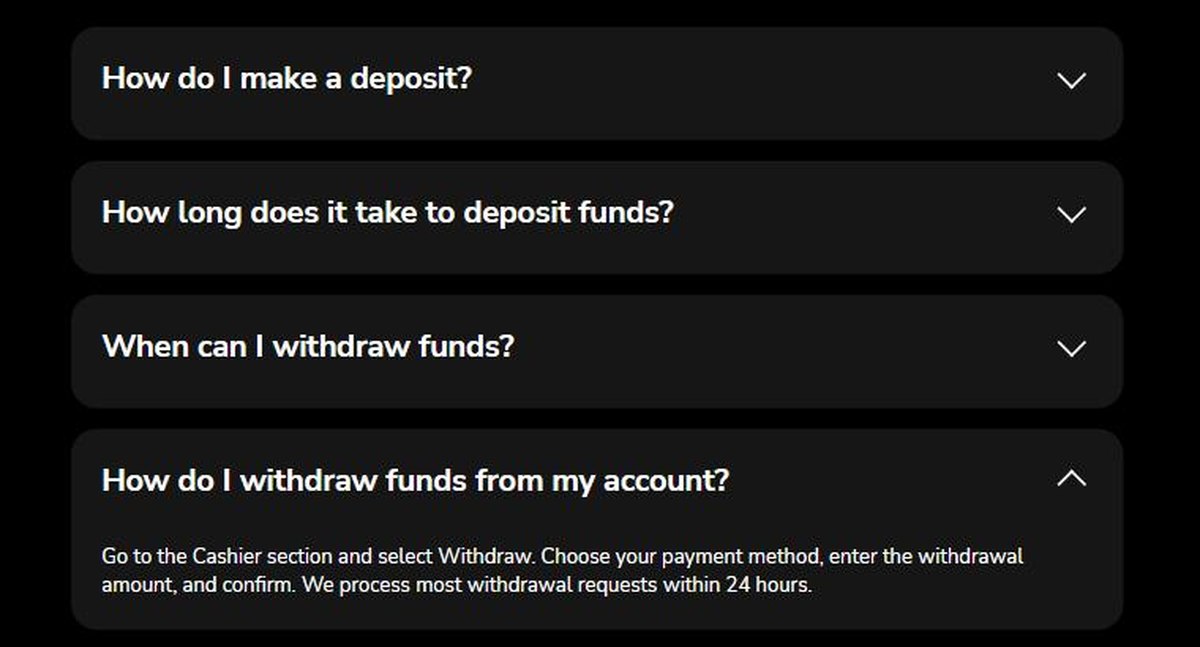
The mechanics are four steps and take under a minute:
- Open the Cashier section inside your account and select Withdraw
- Choose your payment method
- Enter the amount
- Confirm the request
Stockity states that you can request a withdrawal at any time, provided your account is verified, and that it processes most withdrawal requests within 24 hours. That headline figure is the company-wide average — but it is not the whole story, because the published waiting time varies by account status.
Stockity withdrawal speed depends on your account status
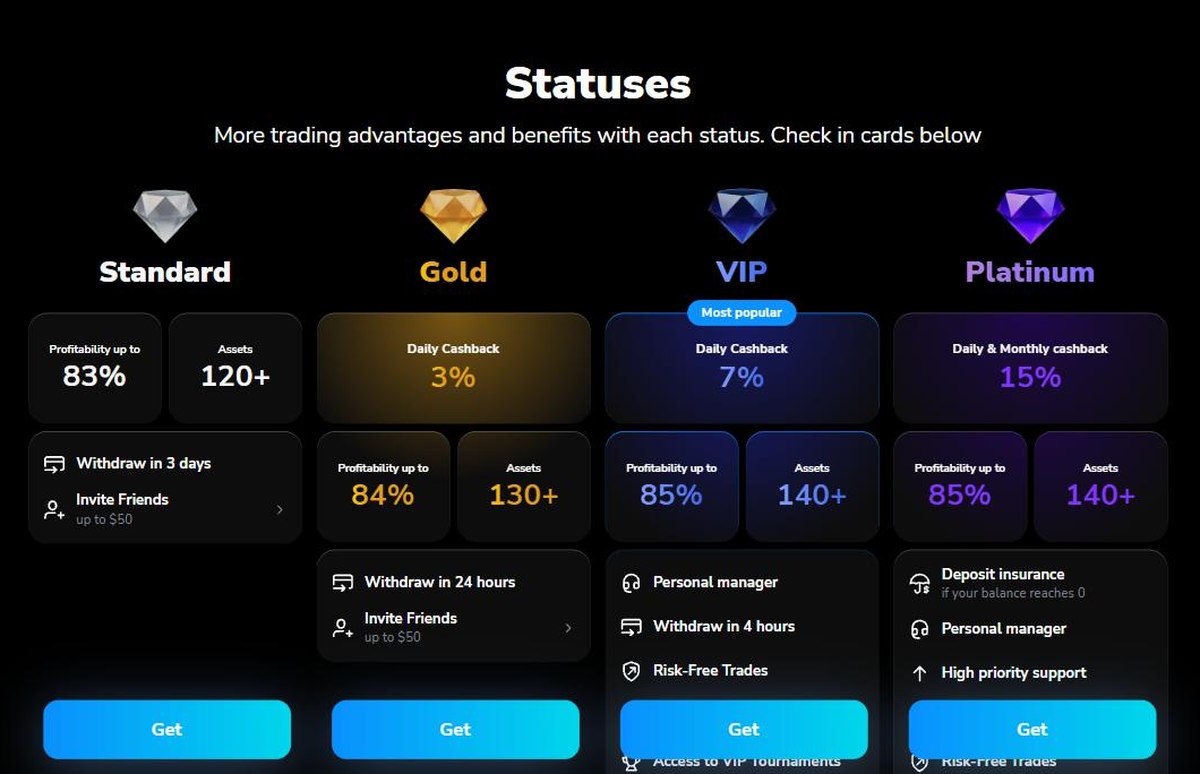
This is the single most useful thing to know before you fund an account. Stockity runs four status tiers, and each one lists a different withdrawal window:
- Standard — withdraw in 3 days. Profitability up to 83%, 120+ assets, refer a friend for up to $50.
- Gold — withdraw in 24 hours. Daily cashback 3%, profitability up to 84%, 130+ assets.
- VIP — withdraw in 4 hours. Daily cashback 7%, profitability up to 85%, 140+ assets, a personal manager, risk-free trades, referrals up to $850 and access to VIP tournaments.
- Platinum — withdraw in 4 hours. Daily and monthly cashback 15%, deposit insurance if your balance reaches zero, a personal manager and high-priority support.
The gap between the entry tier and the top one is real: three days against four hours. If fast access to your own money matters to you, the status ladder is worth understanding before you deposit rather than after.
Verification: the step that gates every Stockity withdrawal
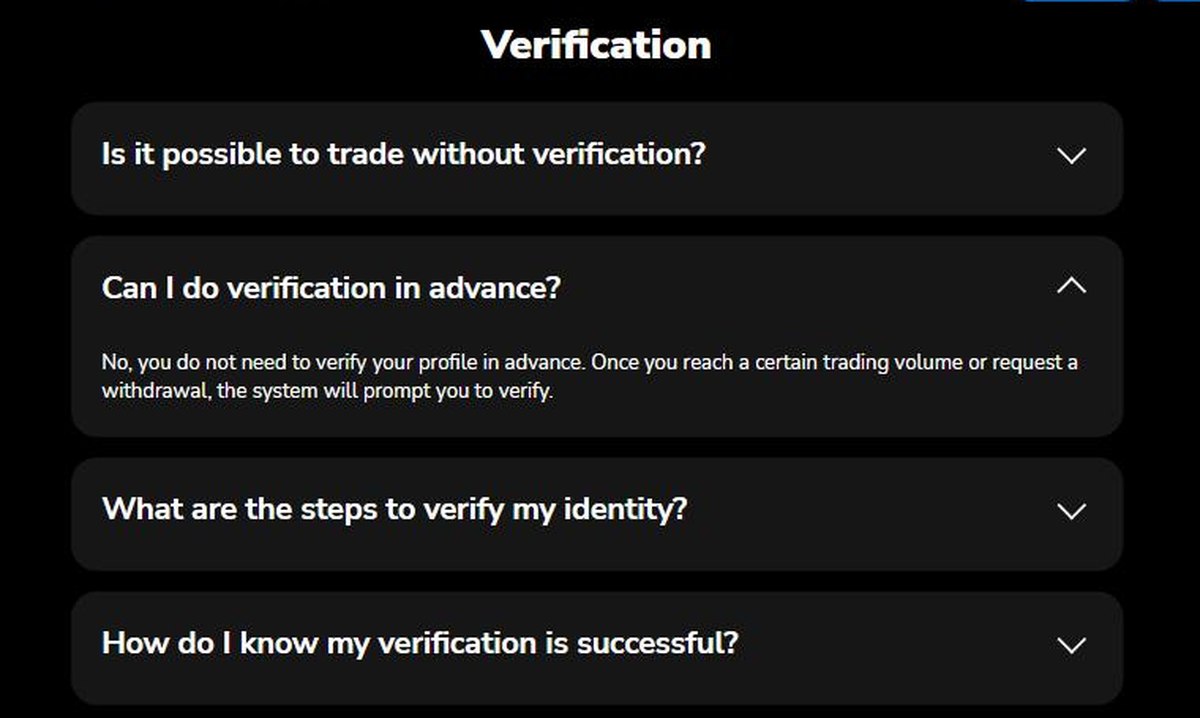
Stockity splits verification from registration, and the arrangement is convenient right up until the moment it is not.
- You can open an account, deposit and start trading without verifying anything.
- Identity verification becomes mandatory before you can withdraw, and to unlock the full feature set.
- You cannot verify early even if you want to — the company states you do not need to verify in advance, and the system prompts you once you reach a certain trading volume or request a withdrawal.
- The process itself: go to profile settings and upload a clear photo of your ID plus valid proof of address. Stockity checks the documents and emails you when they are approved; your profile status updates automatically.
The practical implication is worth stating plainly. Because the prompt arrives when you request a payout, the document check sits between you and your money at exactly the moment you want it. Respond to that prompt the day it appears rather than the day you need the funds, and have a clear ID photo and a recent utility bill or bank statement ready before you start.
Depositing: local payment methods, mostly instant
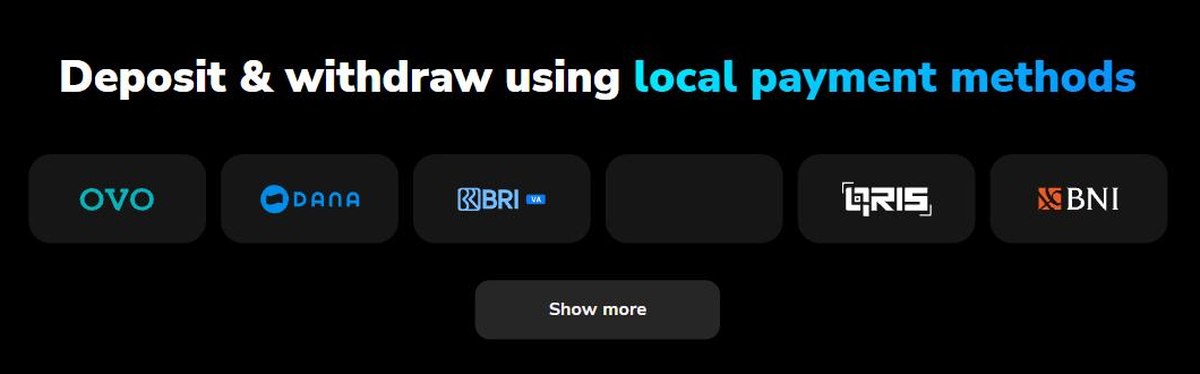
Funding runs through the same Cashier section: select Deposit, choose a payment method, enter the amount and confirm.
What sets Stockity apart here is the emphasis on local payment methods rather than international cards alone. In the markets it serves most heavily that means regional e-wallets and bank rails — the Indonesian page, for example, lists options such as OVO, DANA, BRI virtual accounts, QRIS and BNI. Which methods appear depends on the country you register from.
On timing the company is specific: most deposits arrive instantly, while bank transfers may take longer depending on your bank processing times. As a general rule, withdrawing to the same method you deposited with is the smoothest path. The available methods are shown at sign-up.
Keeping the account secure before you withdraw
A payout is only as safe as the account it leaves from, and this is where Stockity gives users something concrete to do rather than a reassurance to read.
Two-factor authentication is available in the Security settings. You link the account to an authenticator app, and from then on every login requires a unique temporary code from your phone — which, as the company puts it, keeps the account safe even if someone guesses the password. On a platform where the account holds money and a verified identity, that is not an optional extra.
Alongside it, Stockity says it operates under international financial regulations and uses advanced encryption to protect personal data and funds. Registration asks for a secure password from the outset. Support is available through a Help Centre and by email at any hour.
The Platinum deposit insurance, and what it is not
The top status tier lists something unusual: deposit insurance if your balance reaches zero. It is a genuine feature and worth knowing about, but it needs to be read precisely.
- It is a loyalty benefit offered by Stockity itself, not a statutory compensation scheme like the UK FSCS or the Cyprus ICF.
- It applies only at Platinum status, alongside the 15% daily and monthly cashback, priority support and personal manager.
- It covers a balance reaching zero through trading — it is not protection against the company itself failing.
Treated as a cushion for an aggressive week it is a real perk. Treated as investor protection it is the wrong thing entirely, and nobody should choose a platform on that basis.
Demo money cannot be withdrawn
One point that catches newcomers out, and Stockity states it clearly: the $10,000 on the free demo account is strictly virtual. Profits made there cannot be withdrawn, cannot be converted, and cannot be transferred to a real account.
That is not a limitation so much as the point of a practice environment — but it does mean a strong demo week produces nothing you can move to a bank. Switching to real money is done from the balance menu at the top of the trading screen, and only then does anything in this guide apply. The demo runs without a deposit.
Licensing and risk: what stands behind your money
Because a withdrawal is ultimately a question of trust, it is worth being precise about the framework Stockity operates in. The platform runs under Principal’s License №700726 and applies standard AML and KYC procedures — which is exactly why the verification step described above exists at all. Stockity is also associated with Trusted by Traders (TBT), a body that handles complaints and mediates between traders and platforms.
Two points deserve to be stated plainly rather than glossed over. TBT is an industry organisation, not a state financial regulator. And a Principal’s License is not the same tier of supervision as an FCA, ASIC or CySEC authorisation: there is no statutory compensation scheme sitting behind it, and no regulator-imposed cap on retail leverage. That does not make the Stockity withdrawal process described in this guide any less real — traders do get paid, and the status-based timelines are published openly — but your protection comes from the platform’s own procedures and its record of honouring requests, rather than from a national regulator’s safety net. Knowing which of those you are relying on is simply part of sizing your account sensibly.
Stockity states the risk in its own words: “Stockity provides services only to adult users. Online trading may involve significant financial risks including the risk of losing all funds on your trading account. Please, estimate all the risks and get advice from an independent financial advisor… We also recommend not to invest funds you can’t afford.” Trading here is speculative, and money you cannot comfortably lose does not belong in the account in the first place.
One practical note on eligibility: Stockity does not publish an open list of restricted countries. The conditions that govern who may hold an account sit in the Client Agreement you are shown at registration, so if you are unsure whether your country is served, read that document before you fund anything rather than after.
Getting your first Stockity withdrawal right
Almost every payout complaint on any platform traces back to something that could have been sorted out on day one. On Stockity the sequence that keeps a first Stockity withdrawal smooth is short enough to memorise:
- Verify before you need to. Documents cannot be submitted in advance of the account existing, but they can be submitted long before your first payout. Do it the day you open the account and the verification queue never sits between you and your money.
- Withdraw through the method you deposited with. Sending funds back down the same channel — the same e-wallet, the same bank — is the single biggest factor in a Stockity withdrawal clearing without follow-up questions.
- Know your status tier. Standard is up to three days, Gold is 24 hours, VIP and Platinum are four hours. If speed matters to you, the tier is the lever, and it is the one thing on this list you control by trading volume.
- Switch on two-factor authentication. An authenticator app takes a minute to link and means a stolen password alone cannot start a Stockity withdrawal.
- Rehearse on the demo. The $10,000 practice balance is virtual and cannot be withdrawn, but it costs nothing to learn the interface, the asset list and the order flow there before real funds are involved.
Taken together, the picture is a platform that has made its payout mechanics unusually legible: the tiers are published, the speeds attached to them are published, and the verification requirement is stated up front rather than sprung on you at the Cashier. That transparency is what makes a Stockity withdrawal predictable — you can work out, before you ever deposit, roughly how long your money will take to come back. If you want to see the status tiers and the Cashier flow for yourself, the platform is open to explore here.
If you are still mapping the market before committing, it is worth reading how other platforms handle the same ground: our XM review for small starting balances looks at the same questions from a forex angle, and the Deriv review covers another platform built around short-term contracts.
