
Introduction
In the rapidly evolving world of online trading, finding a reliable and comprehensive platform can be challenging. Deriv, formerly known as Binary.com, has established itself as a prominent player in the derivatives trading space, offering a diverse range of financial instruments and trading options. This comprehensive review examines Deriv’s features, strengths, weaknesses, and overall value proposition for traders in 2025.
Founded in 1999, Deriv has over two decades of experience in the financial services industry. The company has successfully transitioned from its binary options roots to become a multi-asset broker offering various trading instruments and platforms. With offices in multiple jurisdictions and regulatory oversight from several financial authorities, Deriv aims to provide a secure and transparent trading environment for both novice and experienced traders.
Company Overview and Regulation
Deriv operates under multiple legal entities across different jurisdictions, ensuring compliance with local regulations and providing traders with appropriate investor protection. The company holds licenses from several reputable regulatory bodies, including the Malta Financial Services Authority (MFSA), the British Virgin Islands Financial Services Commission, and the Vanuatu Financial Services Commission.
This multi-jurisdictional approach allows Deriv to serve clients from various countries while maintaining regulatory compliance. The segregation of client funds, regular audits, and adherence to strict financial regulations demonstrate the company’s commitment to operational transparency and client protection.
The company’s long-standing presence in the industry, combined with its regulatory compliance, provides traders with confidence in the platform’s legitimacy and reliability. Deriv’s evolution from Binary.com to its current form shows adaptability and commitment to meeting changing market demands and regulatory requirements.
Trading Platforms and Technology
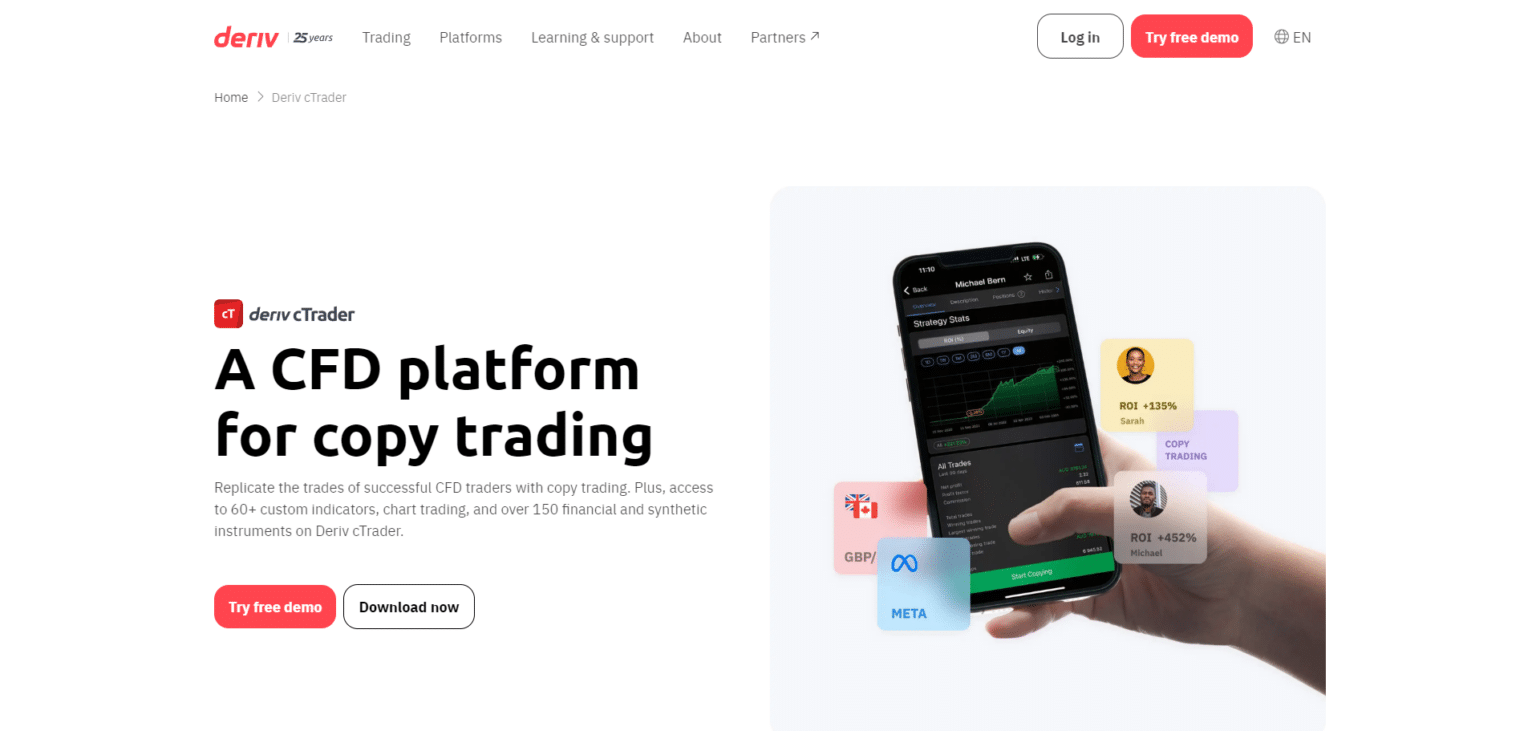
Deriv offers multiple trading platforms designed to cater to different trading styles and preferences. The flagship platform, DTrader, provides an intuitive interface for trading various financial instruments. The platform features real-time charts, technical analysis tools, and customizable layouts that allow traders to create their preferred trading environment.
For more advanced traders, Deriv offers MetaTrader 5 (MT5), one of the industry’s most popular and sophisticated trading platforms. MT5 provides advanced charting capabilities, algorithmic trading support, and a comprehensive suite of technical indicators. The platform supports Expert Advisors (EAs), allowing traders to implement automated trading strategies.
The mobile applications for both iOS and Android devices ensure traders can access their accounts and execute trades on the go. The mobile platforms maintain most of the functionality available on desktop versions, including chart analysis, order management, and account monitoring.
Deriv’s proprietary trading platforms demonstrate the company’s investment in technology and user experience. The platforms are regularly updated with new features and improvements based on user feedback and market developments.
Available Trading Instruments
One of Deriv’s strongest points is its diverse range of trading instruments. The platform offers access to multiple asset classes, providing traders with numerous opportunities across different markets.
Forex Trading: Deriv provides access to major, minor, and exotic currency pairs, allowing traders to capitalize on foreign exchange market movements. The platform offers competitive spreads and leverages on popular pairs like EUR/USD, GBP/USD, and USD/JPY.
Indices: Traders can access popular stock indices from around the world, including the S&P 500, FTSE 100, DAX, and Nikkei 225. These instruments allow exposure to broad market movements without trading individual stocks.
Commodities: The platform includes precious metals like gold and silver, as well as energy commodities such as crude oil and natural gas. Commodity trading provides portfolio diversification opportunities and inflation hedges.
Cryptocurrencies: Deriv offers trading on popular cryptocurrencies including Bitcoin, Ethereum, Litecoin, and other major digital assets. The crypto market’s 24/7 nature aligns well with Deriv’s round-the-clock trading availability.
Synthetic Indices: Perhaps Deriv’s most unique offering is its synthetic indices – artificially generated markets that simulate real-world market movements. These instruments trade 24/7 and are not affected by real-world events, providing consistent trading opportunities.
Trading Types and Options
Deriv distinguishes itself by offering multiple trading types, each suited to different risk profiles and trading strategies.
CFD Trading: Contract for Difference (CFD) trading allows traders to speculate on price movements without owning the underlying asset. Deriv offers CFDs on forex, indices, commodities, and cryptocurrencies with varying leverage options.
Multipliers: This unique product allows traders to amplify their potential profits while limiting their potential losses to the initial stake. Multipliers provide leveraged exposure with built-in risk management.
Digital Options: These are simplified derivatives that pay out a fixed amount if certain conditions are met at expiry. Digital options offer defined risk and reward scenarios, making them suitable for traders who prefer clear profit/loss parameters.
Lookbacks: These options allow traders to benefit from the highest or lowest price reached during the contract period, providing unique profit opportunities in volatile markets.
Touch/No-Touch Options: These instruments pay out if the price touches (or doesn’t touch) a predetermined barrier level during the contract period.
The variety of trading types ensures there are suitable instruments for different market conditions and trading strategies.
Account Types and Requirements
Deriv offers straightforward account opening with minimal requirements. The standard account requires basic personal information and identity verification, following Know Your Customer (KYC) protocols.
The platform provides both real money and demo accounts. Demo accounts come with virtual funds, allowing new traders to practice without financial risk. This feature is particularly valuable for those new to trading or testing new strategies.
Account funding options include various payment methods such as credit/debit cards, bank transfers, and e-wallets. The minimum deposit requirements are generally accessible to retail traders, though specific amounts may vary by region and payment method.
Deriv also offers different account currencies, allowing traders to maintain accounts in their preferred currency and potentially reduce conversion costs.
Fees and Costs
Deriv’s fee structure is generally competitive within the industry. The company primarily generates revenue through spreads on CFD trading and fixed payouts on options trading.
Spreads: CFD trading involves spreads that vary by instrument and market conditions. Major forex pairs typically have tighter spreads compared to exotic pairs or other asset classes.
Commissions: Most trading activities on Deriv do not involve separate commissions, with costs incorporated into spreads or built into option pricing.
Overnight Fees: CFD positions held overnight may incur swap fees, which can be positive or negative depending on the instrument and position direction.
Deposit and Withdrawal Fees: The platform generally doesn’t charge deposit fees, though some payment processors may impose their own charges. Withdrawal fees vary by method and may include processing fees from third-party providers.
The transparent fee structure helps traders understand their trading costs upfront, enabling better risk management and strategy planning.
Educational Resources and Support
Deriv provides comprehensive educational resources designed to help traders improve their skills and understanding of financial markets.
Trading Guides: The platform offers detailed guides covering various trading concepts, from basic terminology to advanced strategies. These resources cater to traders at different experience levels.
Video Tutorials: Educational videos explain platform features, trading strategies, and market analysis techniques. The visual format makes complex concepts more accessible.
Webinars: Regular webinars feature market analysis, trading strategies, and platform updates. These sessions often include Q&A segments where traders can ask specific questions.
Economic Calendar: An integrated economic calendar helps traders stay informed about upcoming market-moving events and economic releases.
Market Analysis: Regular market commentary and analysis help traders understand current market conditions and potential opportunities.
The educational resources demonstrate Deriv’s commitment to trader development and success.
Customer Support
Deriv provides customer support through multiple channels, including live chat, email, and phone support in various languages. The support team is generally responsive and knowledgeable about platform features and trading processes.
The help center contains a comprehensive FAQ section addressing common questions about account management, trading, and platform functionality. The search functionality makes it easy to find specific information quickly.
Social media presence on platforms like Facebook, Twitter, and Telegram provides additional communication channels and community interaction opportunities.
Response times for support inquiries are generally reasonable, though complex issues may require additional time for resolution.
Advantages
Diverse Instrument Selection: The wide range of available instruments provides traders with numerous opportunities across different markets and asset classes.
Multiple Trading Types: The variety of trading options caters to different risk preferences and strategies, from conservative to aggressive approaches.
Unique Synthetic Indices: These 24/7 markets provide consistent trading opportunities unaffected by real-world market closures or events.
Regulatory Compliance: Multiple licenses and regulatory oversight provide trader protection and operational transparency.
User-Friendly Platforms: Intuitive interfaces make the platforms accessible to traders of all experience levels.
Educational Resources: Comprehensive learning materials support trader development and skill improvement.
Mobile Trading: Full-featured mobile applications enable trading from anywhere.
Demo Accounts: Risk-free practice accounts allow strategy testing and platform familiarization.
Disadvantages
Limited Stock Trading: Unlike some competitors, Deriv doesn’t offer direct stock trading, focusing instead on derivatives.
Regional Restrictions: Some regions have limited access to certain features or instruments due to regulatory constraints.
Complex Product Range: The variety of trading types, while advantageous, can be overwhelming for beginners.
Overnight Fees: CFD positions held overnight incur swap fees that can impact profitability for longer-term positions.
Customer Support Limitations: While generally responsive, support may not be available 24/7 in all languages.
Security and Safety
Deriv implements robust security measures to protect client funds and personal information. Client funds are segregated from company funds and held in separate accounts with reputable banks. This segregation ensures client money remains protected even in unlikely scenarios of company financial difficulties.
The platform uses SSL encryption to protect data transmission and implements strict authentication procedures to prevent unauthorized account access. Regular security audits and compliance checks ensure ongoing protection standards.
Two-factor authentication (2FA) is available for additional account security, and traders are encouraged to use strong passwords and keep their login credentials confidential.
For another take on how a short-term contract platform handles cashing out, see our Stockity withdrawal guide, which covers the status tiers, the local payment methods and the verification step that has to clear before a payout is released.
Conclusion
Deriv presents a comprehensive trading platform that caters to a wide range of trading preferences and experience levels. Its evolution from Binary.com demonstrates adaptability and commitment to meeting changing market demands. The platform’s strengths include diverse instrument selection, multiple trading types, regulatory compliance, and educational resources.
The unique synthetic indices and variety of derivative products set Deriv apart from many competitors. The platform’s user-friendly interface combined with advanced features like MT5 integration provides flexibility for different trading styles.
However, potential users should consider the limitations, including regional restrictions and the focus on derivatives rather than direct asset ownership. The complexity of available products may require additional learning time for newcomers.
For traders seeking a regulated platform with diverse trading opportunities and comprehensive educational support, Deriv represents a solid option in the online trading landscape. The combination of innovative products, established track record, and commitment to regulatory compliance makes it worthy of consideration for both novice and experienced traders.
As with any trading platform, potential users should thoroughly research and understand the risks involved in trading derivatives and ensure the platform meets their specific trading needs and regulatory requirements in their jurisdiction. Demo accounts provide an excellent opportunity to explore the platform’s features and capabilities before committing real capital.
The online trading industry continues to evolve, and Deriv’s track record suggests it will continue adapting to meet trader needs and regulatory requirements. For those considering Deriv as their trading platform, the combination of features, regulation, and educational support provides a foundation for informed trading decisions.
Deriv offers complex derivatives, such as options and contracts for difference (“CFDs”). These products may not be suitable for all clients, and trading them puts you at risk. Please make sure that you understand the following risks before trading Deriv products: a) you may lose some or all of the money you invest in the trade, b) if your trade involves currency conversion, exchange rates will affect your profit and loss. You should never trade with borrowed money or with money that you cannot afford to lose.